
Digital & Offset Printing
September 17, 2026
Digital Printing vs Offset Printing: Key Differences
is an important consideration when choosing the right printing method for your project. Both printing methods have their own advantages, and the right choice depends on factors such as quantity, budget, quality, turnaround time and the type of material you need. Choosing the right printing method can make a significant difference to the quality, cost, turnaround time, and overall appearance of your printed materials. Two of the most commonly used methods are digital printing and offset printing.
Understanding digital printing vs offset printing can help you choose the most suitable printing method for your project.
While both can produce high-quality results, they are suited to different types of projects. Understanding the difference between digital and offset printing can help businesses, organizations, and individuals choose the right solution for their printing requirements.
In this guide, we explain how digital printing and offset printing work, their key differences, and when you should consider each option.
What Is Digital Printing?
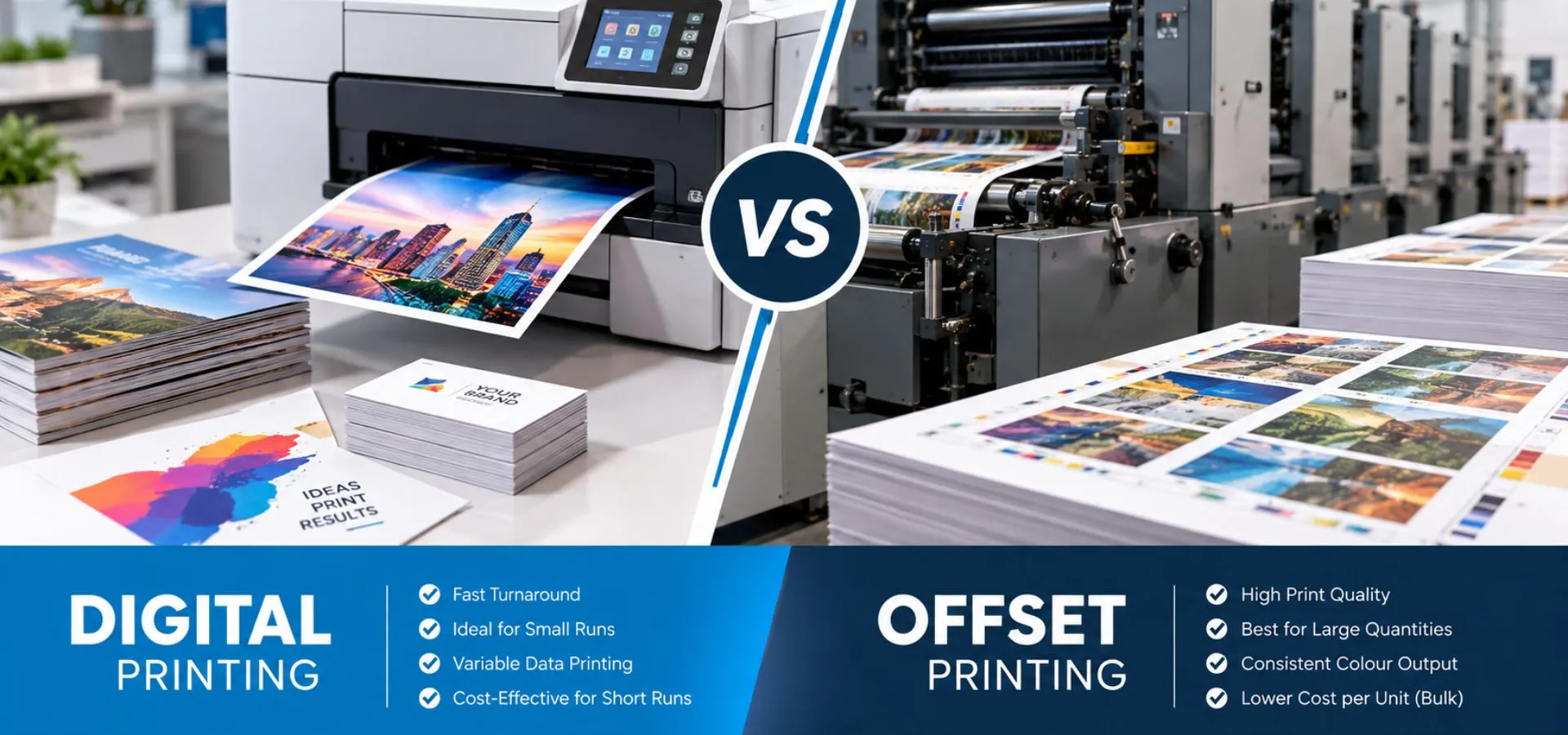
Digital printing is a modern printing method in which digital files are printed directly onto the chosen material. Unlike traditional offset printing, it does not require printing plates.
This makes digital printing suitable for projects that require quick production, smaller quantities, or customized printed materials.
Digital printing can be used for a wide range of applications, including:
- Business cards
- Flyers
- Brochures
- Posters
- Invitations
- Marketing materials
- Corporate documents
- Personalized promotional materials
One of the main advantages of digital printing is its flexibility. Businesses can produce smaller quantities without requiring the setup associated with traditional printing methods.
What Is Offset Printing?
Offset printing is a traditional printing process that uses printing plates to transfer an image onto a rubber blanket and then onto the printing surface.
It is commonly used for larger-volume printing projects where consistent quality and efficient production are important.
Offset printing is often suitable for:
- Brochures
- Catalogues
- Magazines
- Corporate stationery
- Marketing materials
- Books
- Large-volume commercial printing
Once the printing setup is complete, offset printing can efficiently produce large quantities while maintaining consistent colours and print quality.
What Is Offset Printing?
Although both methods can produce professional results, there are several differences between digital and offset printing.
1. Printing Process
Digital printing works directly from a digital file, without the need to create printing plates.
Offset printing requires plates to be prepared before the actual printing process begins.
This difference affects setup time, production workflow, and the suitability of each method for different quantities.
2. Printing Quantity
Digital printing is particularly convenient for small and medium-sized print runs because there is minimal setup involved.
Offset printing can be more suitable for larger quantities, where the initial setup can be spread across a higher number of printed copies.
The most suitable option depends on the quantity, project requirements, and overall budget.
3. Turnaround Time
Digital printing generally involves a simpler setup process, which can make it suitable for projects with shorter deadlines.
Offset printing requires additional preparation before production begins. For larger-volume projects, however, offset printing can provide efficient production once the setup is complete.
If you need printed materials quickly, discuss your deadline and quantity with your printing provider before selecting a method.
4. Customization
Digital printing offers flexibility when every printed piece needs different information or designs.
For example, businesses may require personalized:
- Invitations
- Promotional materials
- Direct-mail pieces
- Event materials
- Marketing campaigns
Offset printing is generally more appropriate when producing a consistent design in larger quantities.
5. Colour and Print Quality
Both digital and offset printing can deliver professional-quality results.
Offset printing is widely used when precise and consistent colour reproduction is an important requirement, particularly for larger commercial print runs.
Digital printing has also developed significantly and can provide excellent results for many everyday business and marketing applications.
The best choice depends on the type of material, design, quantity, and colour requirements.
When Should You Choose Digital Printing?
Digital printing may be a suitable option when you need:
- A smaller print quantity
- Faster turnaround
- Personalized or variable content
- Multiple versions of a design
- Short-term marketing materials
- Samples or prototypes
For example, if a company needs a few hundred brochures for an upcoming event, digital printing may provide the flexibility needed for the project.
When Should You Choose Offset Printing?
Offset printing may be suitable when you need:
- Larger print quantities
- Consistent colours across a large print run
- High-volume commercial materials
- Consistent designs across thousands of copies
- Long-term marketing or promotional materials
For example, a company producing a large quantity of catalogues or brochures for distribution may consider offset printing.
Which Printing Method Is More Cost-Effective?
There is no single answer because the cost depends on several factors, including:
- Number of copies
- Paper or material
- Colour requirements
- Finishing options
- Design complexity
- Turnaround time
- Customization requirements
For smaller quantities, digital printing can be more practical because it requires less setup.
For larger quantities, offset printing may become more cost-effective because the setup cost is distributed across a greater number of copies.
Instead of choosing a printing method based only on price per copy, consider the total cost of the project and its specific requirements.
When comparing digital printing vs offset printing, the right choice depends on your print quantity, budget, turnaround time and project requirements.
How to Choose the Right Printing Method
Before placing your printing order, consider the following questions:
How many copies do you need?
If you need a smaller quantity, digital printing may provide greater flexibility. For larger quantities, offset printing may be worth considering.
How quickly do you need the materials?
If your project has a tight deadline, ask your printing provider which method can meet your required delivery time.
Do you need personalization?
If individual copies require different names, information, or designs, digital printing can offer useful flexibility.
Is colour consistency important?
For projects where consistent colour reproduction across a large print run is important, discuss your requirements with the printing provider and consider whether offset printing is appropriate.
What finishing do you require?
Finishing options such as lamination, binding, folding, or cutting can affect the overall project requirements and cost.
Why Choose a Professional Printing Service in Qatar?
A professional printing provider can help you select the appropriate printing method based on your project rather than simply recommending one process for every job.
For businesses in Qatar, this can be particularly useful when producing marketing materials, corporate stationery, brochures, promotional materials, and other printed products.
At Atlantic Qatar, customers can explore printing solutions for different business and personal requirements. Our services include digital printing and offset printing, along with a range of other printing and finishing solutions.
Whether you are preparing materials for a business campaign, an event, an office, or a large commercial project, discussing your requirements with a printing professional can help you determine the appropriate production method.
Frequently Asked Questions
Neither method is universally better. The right choice depends on your quantity, deadline, customization requirements, materials, and budget.
Yes. Digital printing is often suitable for smaller print runs because it requires less setup than offset printing.
Offset printing is commonly used for larger print runs and can be efficient when producing a high number of consistent copies.
Digital printing can offer a faster setup for many smaller projects. However, the actual turnaround time depends on the project, quantity, finishing requirements, and printing provider.
Yes. Modern digital printing technology can produce high-quality results for many business, marketing, and personal printing applications.
Consider the quantity, deadline, customization requirements, colour needs, materials, finishing, and budget. A professional printing provider can also recommend a suitable method based on your project.
Conclusion
Digital and offset printing both have important advantages, and the right choice depends on the requirements of your project.
Digital printing can be a practical choice for smaller quantities, quick turnaround, and personalized materials. Offset printing can be suitable for larger print runs where consistent production and colour reproduction are important.
Before placing your order, consider your quantity, deadline, design, materials, and finishing requirements. Choosing the appropriate printing method can help you achieve the quality and results you expect from your printed materials.
Ultimately, digital printing vs offset printing depends on the specific requirements of your project.For printing requirements in Qatar, explore the printing solutions available from Atlantic Qatar and contact our team to discuss your project.
Looking for a reliable
Digital & Offset Printing Solutions Qatar
Professional printing, branding, signage, and customized solutions designed to meet your business needs across Qatar.
Get A Free Quote Today